 |
|
|
|
|
|
|
|
|
|
|
|
|
|
|
|
|
|
|
|
|
|
|
 |
|
|||||||||||||||||||||
 |
 |
 |
|
|||||||||||||||||||
 |
 |
 |
|
|||||||||||||||||||
 |
 |
 |
|
|||||||||||||||||||
 |
 |
 |
 |
 |
|
|||||||||||||||||
 |
 |
|
||||||||||||||||||||
 |
 |
|
||||||||||||||||||||
 |
 |
 |
 |
 |
 |
 |
 |
 |
 |
 |
 |
|
||||||||||
 |
 |
 |
 |
|
||||||||||||||||||
 |
|
|||||||||||||||||||||
 |
|
|||||||||||||||||||||
 |
|
|||||||||||||||||||||
 |
|
|||||||||||||||||||||
 |
|
|||||||||||||||||||||
 |
|
|||||||||||||||||||||
|
|
|
|
|
|
|
|
|
|
 |
|
||||||||
 |
 |
 |
|
||||||
 |
|
||||||||
 |
 |
|
|||||||
 |
|
||||||||
 |
 |
|
|||||||
 |
|
||||||||
 |
|
||||||||
 |
|
||||||||
 |
 |
 |
|
||||||
 |
 |
|
|||||||
 |
|
||||||||
 |
|
||||||||
 |
 |
 |
|
||||||
 |
|
||||||||
|
||||||||||||||||||||||||||||||||||||||||||||||||








Five Animals Qigong
Wudang Five Animals Qigong is an ancient Taoist exercise designed to improve one's health and longevity. As the name implies, the movements of this exercise are based on the movements of five animals; the dragon, the tiger, the leopard, the snake, and the crane. Each animal movement improves the function of a specific internal organ. The dragon improves the kidneys, the tiger improves the lungs, the leopard improves the liver, the snake improves the spleen, and the crane improves the heart. Through dedicated practice, Wudang Five Animals Qigong has the capacity to bring balance back to one's internal organ system. When the internal organs are in balance, the body is able to work at its optimum efficiency, thus improving the overall health and longevity of the practitioner.
In addition to bringing harmony back to the internal organs, Wudang Five Animals Qigong also opens up the joints, lengthens the tendons, and strengthens the muscles. Furthermore, this ancient exercise improves the functions of the respiratory and circulatory systems as well; this not only allows the body to deliver fresh, oxygen-rich blood to all the extremities of the body but it is also assists with the elimination of deadly toxins. The overall function of Wudang Five Animals Qigong is to the body soft and supple, like that of a child. If practiced regularly, this exercise can literally reverse the aging process so that one can enjoy the benefits of strong and healthy body well into their years.
The overall objective of this article is to introduce the practitioner to the many benefits of Wudang Five Animals Qigong, and to compliment the video to provide the practitioner with a solid base for practice. This article will cover eight key elements necessary for practice: opening movements, dragon movements, tiger movements, leopard movements, snake movements, crane movements, closing movements, and standing meditation. In addition, basic principles for practice will be included as well. Please note, this article is in no way intended to replace real direction from a certified instructor. Furthermore, Wudang Five Animals Qigong is not intended to diagnose, treat, or cure any disease or ailment. Like any other physical activity, one is advised to consult their primary health care provider before undertaking these exercises. |
 |
Opening Movements
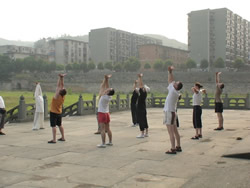
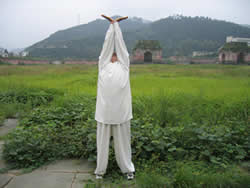
To begin, stand erect with both feet together and the hands resting along the sides. Take a moment in this posture to gather the breath and settle the mind. When ready, step out with the left foot so that the feet are now shoulder width apart. In time with the breath, allow both hands to raise to chest level then let the elbows lead as they fall slowly back down to the waist. Next, leading with the wrists, raise both arms out towards the sides and up above the head. At the extent of this movement, join the arms at the wrists and hold the palms up towards the sky as if holding a bowl; look up and stretch the body while gently holding a full breath for three to nine seconds.
From here, relax and let the hands drop down the center line of the body in a prayer position. Continue to press the hands together down to the waist to stretch the wrists before bringing them back up to the chest level to rest. Repeat this stretch three times. Keep the hands in prayer position, and on the last stretch down, turn the hands so that the fingers point towards the ground. Bring the hands up to the chest to stretch the wrists in the other direction and drop them back down to the waist to relax. Close by allowing the hands to open down, out,and up as if outlining a huge ball. Gather up to the the level of the eyes and then exhale as the hands come down into the yin yang position at the level of the naval. Enjoy the standing meditation posture for approximately three minutes. The yin yang hand position is done by interlocking the two handstogether. |
 |
With the left hand, touch the tip of the middle finger to the outside knuckle of the ring finger on the right hand. With the tip of the left thumb, touch the inside knuckle of the ring finger on the right hand. Finally, interlock the two hands by touching the tips of the middle finger and thumb of the right hand. The hands should resemble two rings linked together.
Standing Meditation
There are three things to take into account during the standing meditation practice: posture, breath, and intention.
The posture should be tall and relaxed. The feet should be parallel and placed shoulder width apart with the weight evenly distributed; keep the knees soft but do not allow them to buckle inwards. Release the tension of the face, head, neck, shoulders, back, rear, thighs, and feet and allow the earth to completely support the body.
The breath should be full and comfortable. Try to keep the breath slow, soft, and even at a rate of four to six breaths per minute. The external flow of breath is a reflection of the internal flow of energy; by regulating the breath, one can regulate the heart rate and chi flow of the body inducing relaxation and ease.
The intention should be focused but gentle. Allow the eyes to lightly gaze on the floor three to six feet ahead. Keep the attention on the breath, concentrating it deep into the naval. Try to still the mind. Avoid distracting thoughts that take the mind off of the present moment of practice.
Dragon
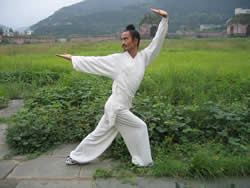
From the standing meditation posture, open by raising both arms forward to the chest level and then dropping them back down to the waist just as it was done in the opening movements. From here, turn both hands as if "holding a ball" with the right hand above the left at the level of the naval. Step out with the left foot into a "bow stance" while the right palm pushes up towards the sky and the left hand moves out laterally to the left as if throwing a frisbee. Try to turn completely around while
keeping both feet planted firmly in a "bow stance." This is the full extent of the motion. Hold this posture for three to nine seconds while comfortably holding a full breath and directing the eyes to the left palm. From this position, slowly turn back to the front and bring the left foot back so that the feet are again at shoulder width. In addition to the step, simultaneously circle the arms back to "hold the ball" except this time the right hand is on the bottom. Repeat this motion on the right side to complete one whole round; three rounds make a full set. Once a full set is complete, close by opening the hands down, out, and up as if outlining a huge ball. Gather to the eye level and then drop the hands down into the yin yang position just as in the opening movements. Enjoy the standing meditation posture for approximately three minutes. |
 |
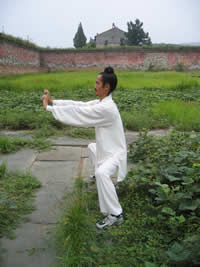
Tiger From the standing meditation posture, open the same way as in the opening movements and the dragon by letting the arms raise and fall in front in time with the breath. From here, step out with the left foot to assume a standard "horse stance." Again, bring the arms up the front with an inhale, but this time draw the hands back so that they are near the shoulders. Now, with the exhale, sink deep into the "horse stance" while pressing both palms forward; the fingers should be bent at the tips so as to resemble a "tiger paw." With the inhale, circle both hands outward and then draw them back towards the shoulders. Then, with the exhale, push the arms strait back with the hands still in a "tiger paw" to stretch the chest and shoulders. With the inhale, turn the hands again, and relax as the hands are drawn back to the shoulders in a scooping motion. This completes one whole round; three rounds make a full set. Once a full set is complete, close by pushing the hands forward and bringing the left foot back so that the feet are again at shoulder width. Allow the hands to drop back to the waist and assume the standing meditation posture; enjoy this stance for another three minutes. |
 |
Leopard
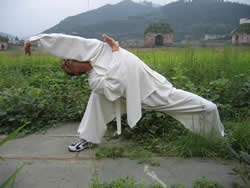
From the standing meditation posture, open in the same manner as in the previous movements and circle the hands to "hold the ball" with the right hand will be on the bottom. Step out with the right foot into a "bow stance" and let the left hand remain stationary as the right hand moves out laterally to the right side as if throwing a frisbee. Once fully extended to the right, sink into a "horse stance" as the right hand pushes back, behind the neck and over to the left side; in time with this movement,
allow the left palm to face up as if to protect the right armpit. This is the full extent of the motion; try to hold it comfortably with a full breath for three to nine seconds while the eyes remain fixed on the extended right hand. From here, allow the right hand to drop down as the body returns to a "horse stance." In a continuous motion, bring the right foot back to shoulder width and circle both hands back to "hold the ball" with the left hand now on the bottom. Repeat this motion on the other side to complete one round; three rounds make a full set. After a full set, close in the same way as the dragon by opening the hands down, out, and up as if outlining a huge ball. Gather to the eye level and once again assume the standing meditation posture. Hold this stance for another three minutes. |
 |
Snake
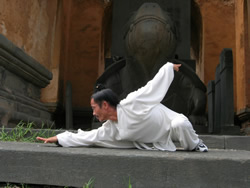
From the standing meditation posture, open again in the same way as the other movements. After the opening, draw the left hand back and the right hand forward as if outlining two circles. While stepping the right foot out into a "bow stance," bring the left hand over to the right side as the right hand drives laterally, palm up, over the left palm. From here, turn the right hand over so that it is now palm down and move the left hand down as the body sinks into a "snake creeps through grass" posture.
While remaining low, shift the weight to the left side and lead with the left hand as the entire body leans over to the left side. From here, move the right hand behind the head, and over to the left side over the left hand. This is the full extent of the posture. Hold it with a full breath for three to nine seconds while keeping the eyes focused on the right hand. From this posture, simply drop the right hand so that the body is now in position to repeat the same movement on the other side. Completing the motion once on both sides makes one round; three rounds complete a full set. After a full set, the closing movements are made by standing back up and moving the right leg back to a shoulder width position while the arms gather in the same manner as the dragon and leopard movements. End with the hands in yin yang position and enjoy standing meditation for another three minutes. |
 |
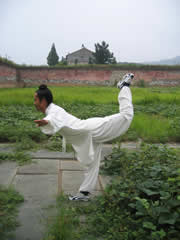
Crane From the standing meditation posture, again, open in the same way as the other movements. After the opening, allow both hands to open out towards the sides until they are parallel with the ground. From here, lift the left knee above the waist and extend the leg strait out with the toe pointed forward. Balance on the right leg as the left leg circles out, around, and back. Lean forward to lift the left leg as high as possible while keeping the head up and the arms level. This is the full extent of the motion. Hold this posture with a full breath for three to nine seconds. From here, slowly drop the leg and return back to the standing position before bringing the back down into the yin yang posture. To do the motion on the other side, simply raise the arms out to the sides; it is not necessary to do the opening movements again. Completing the movements once on both sides makes one full round; three rounds make a set. Once done, repeat the closing movements three times before bringing the left foot in next to the right and letting the hands rest along the sides. This concludes the Wudang Five Animal Qigong. |
 |
Principles for practice
Breath:
Breath is probably the most important part of the Wudang Five Animal Qigong practice. Qigong can be literally translated as "breath work" or "energy skill," and as mentioned earlier, the external flow of breath is a direct reflection of the internal flow of energy, therefore it is very important to be mindful of the breath. During practice, the breath should remain natural and comfortable; it should never be strained or stressed. In addition, the breath should also be in time with the movements; the inhale and exhale of the breath should act as the push and pull behind each motion. Proper breath is essential for effective qigong practice.
Environment:
Only a small amount of space is needed to practice the Wudang Five Animal Qigong, but it is advised to find a clean and quiet environment for practice. Areas such as a beach, forest, or mountain side where the air is fresh and clean are ideal. Spaces that are crowded or busy are not recommended for it will be far too easy to be distracted.
Time and Frequency:
The full set takes approximately thirty to forty-five minutes to do correctly. If the time needed to do the whole set is not available, than only do a portion. It is far better to do only a few movements wholeheartedly than to rush through the entire set in a half-hazard manner. Furthermore, a consistent practice is necessary in order to experience real benefit; therfore this exercise should be practiced at least once every day.
Wudang Taoist Traditional Kung Fu Academy |
|
| Website: http://www.wudanggongfu.com | E-Mail: wudang.wushu.info@gmail.com |
| Mobile: (0086)135-978-86695 | Address: Wudangshan, Shiyan City, Hubei Province, China 442714 |
